Iran's Economic War: Why the UK Cannot Afford to Look Away
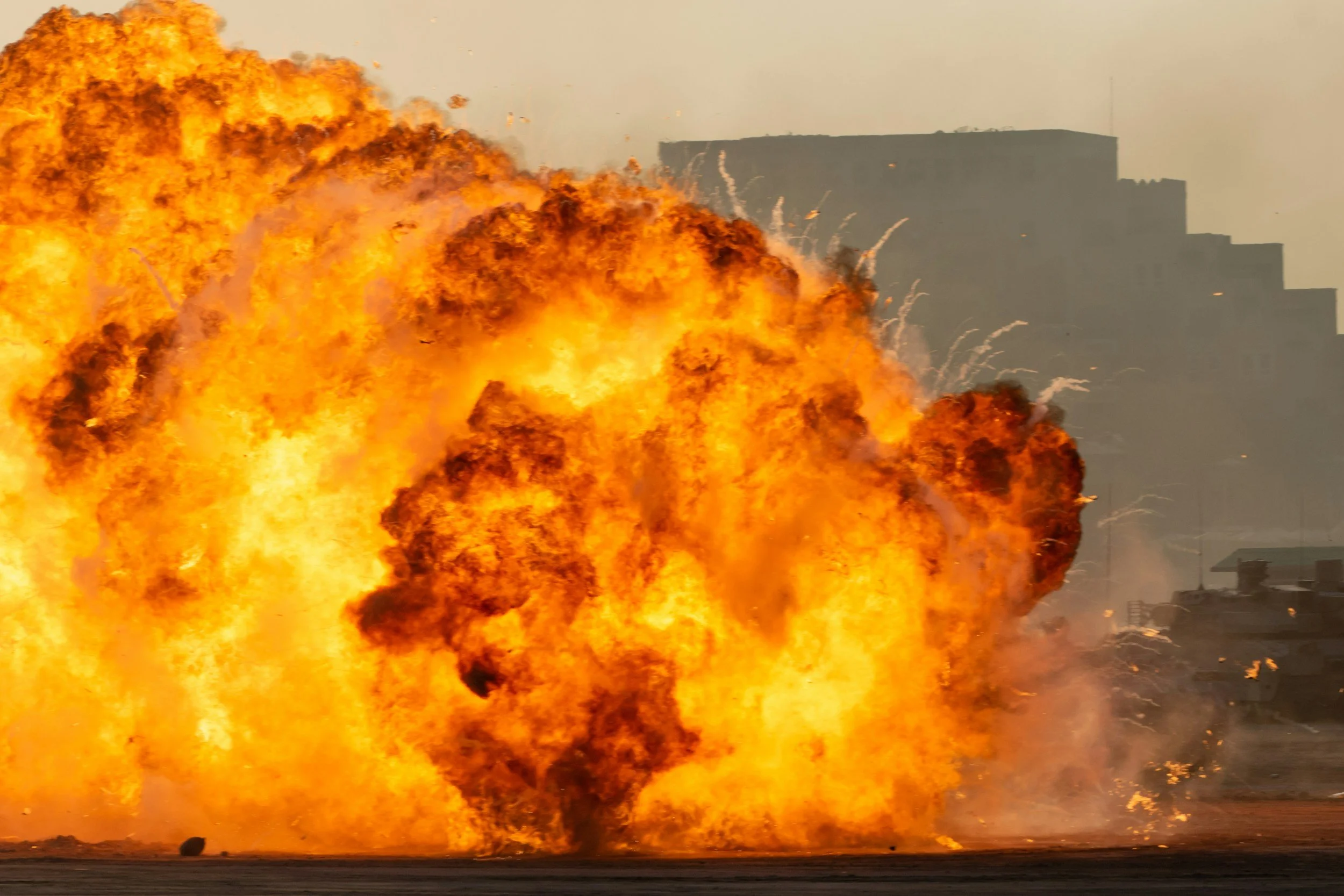
The escalating conflict involving Iran is no longer a regional security concern. It is a live economic shock, and for the United Kingdom, the consequences are already materialising faster than policymakers appear prepared to acknowledge.
🚢 The Strait of Hormuz: The World's Most Dangerous Chokepoint
Approximately 20% of global oil supply transits the Strait of Hormuz. Iranian attacks on energy and economic infrastructure across the Gulf, a strategy that bears striking resemblance to Russia's systematic targeting of Ukrainian energy networks, are now threatening that flow with a frequency and severity that markets can no longer price as tail risk. This is no longer hypothetical disruption. This is structural.
Lloyd's of London has ceased pricing shipping through the Strait of Hormuz corridor. That single development carries enormous downstream consequences. When Lloyd's withdraws, other insurers follow. The cascading effect on global shipping, freight costs, and supply chain economics is significant and it compounds daily as the conflict shows no signs of de-escalation. President Trump's offer to keep the Strait open using the U.S. Navy is noted, but it is unlikely to restore insurer confidence while hostilities are actively widening. Markets price certainty, not intent.
🔥 Qatar, Force Majeure, and the LNG Illusion
Qatar has suspended LNG (Liquid Natural Gas) production entirely, severing a supply line that Europe and the UK had come to treat as a dependable alternative to Russian gas in the post-Ukraine energy order. That assumption is now void. Compounding this, QatarEnergy's invocation of force majeure, effectively excusing itself from existing contractual obligations, is a pivotal moment that deserves far more attention than it has received.
For Europe, and specifically the UK, this matters acutely. The post-Ukraine energy crisis prompted a significant pivot toward LNG, with Qatar positioned as a cornerstone supplier. That supply has now been cut. UK wholesale gas prices have already spiked by over 90%. This is not a forecast. It is a data point. And it is a harbinger.
🏗️ The Shortcomings of Gulfs’ Business Model
The Gulf's entire investment proposition has rested on a carefully constructed narrative: political stability, safe harbour for capital, reliable energy supply, and hospitality as soft power. Iranian attacks have exposed that narrative as structurally fragile. The Gulf is not, it turns out, insulated from the consequences of regional conflict on its doorstep. For investors, insurers, and multinationals that have built supply chain and capital allocation strategies around Gulf stability, this is a material reassessment moment, not a temporary disruption to be waited out.
🇬🇧 The UK's Compounding Exposure
The economic implications for the UK are multi-layered and mutually reinforcing, and they land on an economy that is uniquely ill-placed to absorb them.
The UK enters this crisis carrying the accumulated weight of structural vulnerabilities that have compounded over nearly two decades: anaemic growth since the 2008 financial crisis, an incomplete recovery from the economic scarring of the pandemic, and the friction of departure from the European Union, a combination of headwinds that is, in the developed world, largely unique to Britain. Each of those episodes weakened the economy's buffers. This latest shock arrives before those buffers have been meaningfully rebuilt.
The OBR's recently published growth, inflation, and interest rate projections were constructed on assumptions that no longer hold. Most critically, the forecast that inflation would fall sustainably below 2% must now be called into serious question. An energy price shock of this magnitude, with wholesale gas already up over 90% and a primary LNG supplier having suspended production, will reignite inflationary pressures that the Bank of England has spent the better part of two years trying to contain. The path to 2% does not run through an energy crisis. The prospect of rate cuts recedes accordingly, with direct consequences for mortgage holders, businesses refinancing debt, and a Treasury that had quietly been counting on lower borrowing costs to underpin its fiscal projections.
Insurance premiums across shipping, trade credit, and energy-related sectors are repricing in real time. For a trading nation like the UK, deeply exposed to global supply chain dynamics, rising insurance costs are a tax on commerce. They feed directly into import costs, input prices, and ultimately consumer inflation, adding yet another layer to an already pressured cost environment.
The UK's energy mix, despite meaningful progress on renewables, remains significantly exposed to gas price volatility. Future winter demand, industrial consumption, and the absence of substantial domestic strategic reserve capacity mean that sustained disruption to LNG supply is not an inconvenience, it is a structural vulnerability now being actively stress-tested.
⚔️ The Geopolitical Parallel Worth Taking Seriously
Iran's strategic posture is increasingly coherent when viewed through the lens of asymmetric economic warfare. By targeting energy infrastructure and creating sustained uncertainty in critical maritime corridors, Tehran is, intentionally or not, replicating the playbook that Russia deployed against Europe with considerable effectiveness. The goal is not necessarily military victory. It is economic attrition, the erosion of confidence, and the fracturing of energy security arrangements that Western economies depend upon.
Europe sleepwalked into dependency on Russian gas. The question now is whether it is sleepwalking into an equally dangerous dependency on Gulf LNG, ust as that supply is being called into question.
📉 The Broader Reckoning
For the UK specifically, this moment demands a frank reassessment: of energy security strategy, of the interest rate trajectory, of fiscal assumptions baked into the OBR's projections, and of the degree to which economic resilience has been quietly eroded by dependency on supply chains and energy sources that are now demonstrably fragile.
An economy that has never fully closed the productivity and growth gap opened in 2008, that absorbed a once-in-a-generation pandemic shock without full recovery, and that chose to redraw its trading relationships at a moment of global instability alongside suffering from the energy crisis following Russia’s invasion of Ukraine, means it is now an economy with limited room for another systemic jolt. Yet here one is.
The OBR's models will need revising. The Bank of England's calculus has shifted. And the cost of inaction, political or economic, is rising by the day.
